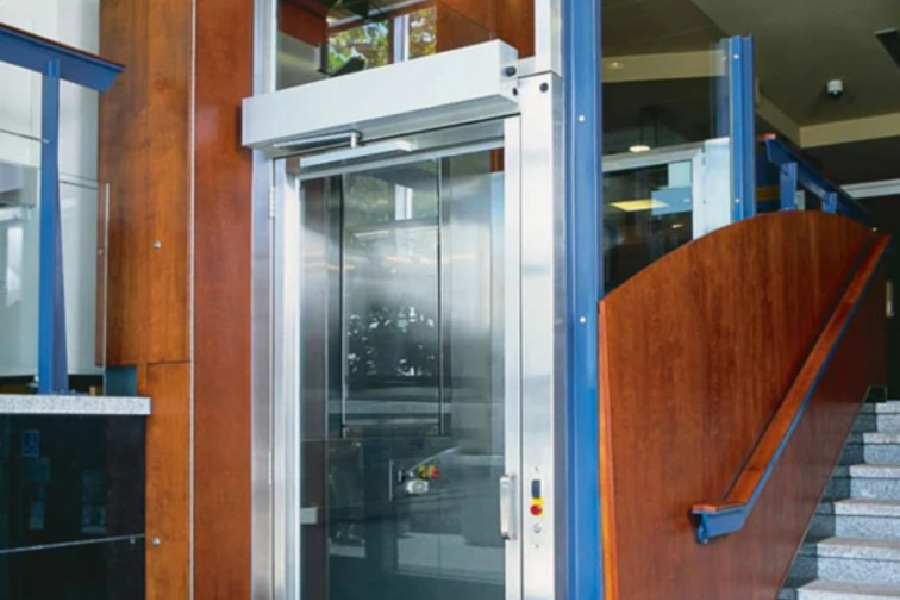
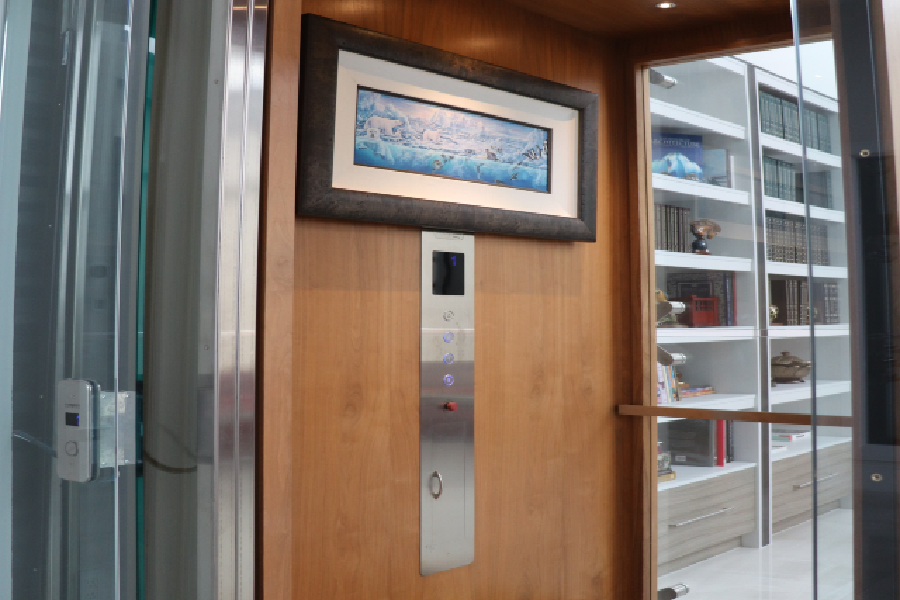
Choosing the right vertical transportation solution for your building isn’t always straightforward. Property owners, architects, and facility managers often debate wheelchair lift vs. elevator when considering accessibility, safety, and long-term value.
At Prime Elevator, we help our clients make informed decisions by highlighting the key differences, operational considerations, and code requirements for both options.
Understanding Wheelchair Lifts / Vertical Platform Lifts (VPLs)
Wheelchair lifts, also known as vertical platform lifts (VPLs), are designed for single handicapped users with an attendant and are often chosen for short rises or retrofit applications. While they can be a cost-effective solution, there are several limitations to consider:
- Operation: Lifts require constant pressure on the button to travel. Releasing the button stops movement, and restarting adds 1–2 seconds per start.
- Capacity: Maximum of 1 user plus 1 attendant with a centered load. Freight is prohibited.
- Speed & Travel: Typical speeds are 20 feet per minute (FPM). For example, traveling from a garage to the first landing takes around 36 seconds, while traveling to the second landing – including walking between lift lobbies – can take 1 minute 20 seconds.
- Duty Cycle: Designed for 30 trips per 24 hours; excessive starts or continuous usage may lead to premature motor or pump failures.
- Service Life: Expected lifespan is 10 years before full replacement is required. Outdoor lifts, even galvanized, deteriorate faster in harsh climates, especially with salt spray, snow, or high winds.
- Enclosure & Doors: Most lifts have steel enclosures with swinging doors. Outdoor configurations may require manual doors with delayed-action hydraulic closers, while powered doors are typically not recommended due to exposure. Ramps or same-side entry/exit may require power doors, which can add complexity.
- Site Requirements: Some buildings may require multiple lifts – for instance, 2 at each end of a building for a total of 4 lifts.
While lifts can be effective for limited use, Prime Elevator often recommends evaluating your long-term accessibility needs before selecting a VPL.
Passenger Elevators: Speed, Safety, and Capacity Advantages
Passenger elevators offer significant advantages over wheelchair lifts for buildings with higher traffic or longer travel distances:
- Operation: A single push of a button brings the elevator automatically to the user – no need to hold the button while traveling.
- Capacity & Freight: Designed for multiple passengers, elevators can also transport freight or furniture with proper padding.
- Safety & Compliance: Equipped with Emergency Medical Services (EMS) and fire recall systems, passenger elevators are built for emergencies.
- Speed & Travel: Elevators can travel at 100–125 FPM or more. Traveling from a garage to the first landing takes about 6 seconds, and to the second landing around 11 seconds. There are no limitations on rise.
- Duty Cycle & Longevity: Rated for 100 starts per hour or 2,400 starts per day, compared to 30 per day on a lift. Structural components, rails, and car frames have a service life exceeding 100 years, with modernization of electronic controls typically at 25 years.
- Site Considerations: Two elevators may replace four lifts for the same building. Installation requires a hoistway with weather-sealed lobbies at each landing. While construction costs may be higher than lifts, the long-term durability and capacity often justify the investment.
Key Safety and Operational Considerations – wheelchair lift vs. elevator
When deciding between wheelchair lift vs. elevator, several critical safety and operational factors should guide your choice:
- User Load & Accessibility: Lifts are limited to one user plus attendant, while elevators accommodate multiple users simultaneously.
- Travel Distance & Time: Passenger elevators are significantly faster for multi-level buildings. Long travel on lifts can result in slow access, especially with multiple trips.
- Durability & Maintenance: Lifts often require full replacement after 10–12 years, particularly in harsh outdoor conditions, while elevators offer decades of reliable service with periodic modernization.
- Environmental Exposure: Outdoor lifts can suffer wind, snow, and salt damage; elevators require weather-protected lobbies but offer far greater protection for moving parts.
- Code Compliance & Safety Features: Elevators are fully compliant with modern building and fire codes, and include advanced safety features like EMS, fire recall, and higher duty cycles.
By understanding these differences, building owners can make decisions that prioritize safety, accessibility, and long-term investment.
Choosing Prime Elevator for Your Accessibility Solutions – wheelchair lift vs. elevator
At Prime Elevator, we specialize in helping clients determine whether a wheelchair lift or passenger elevator is the right fit for their building. Our team evaluates:
- Site requirements and building layout
- Daily usage and expected traffic
- Safety, compliance, and long-term cost considerations
Whether you need wheelchair lift installation or a passenger elevator upgrade, Prime Elevator delivers solutions that are safe, reliable, and tailored to your building’s needs.
Contact Prime Elevator
Ready to find the best solution for your building? Whether you’re deciding between a wheelchair lift or a passenger elevator, Prime Elevator provides expert guidance, safe installations, and long-term reliability.
Contact Prime Elevator today to schedule a consultation with our licensed elevator professionals. Your building’s accessibility and safety start here.